The Sea Roads
Paralleling the Silk Road trading network, a sea-based commerce in the Indian Ocean basin connected the many peoples between China and East Africa. This network was key in the development of Swahili.


Mogadishu

Malindi

Mombasa

Zanzibar

Kilwa

Mozambique

Monomutapa
The Kingdom of Monomutapa was a powerful Shona empire that dominated most of southern Africa beginning in the late 1590s and extending into contemporary Zimbabwe and Mozambique. However, by the end of the sixteenth century, the empire had entered an irreversible decline, fueled by civil strife, internal instability, and increasing external pressure from Portuguese colonial forces along the east coast. As central authority crumbled, provincial leaders gained more independence, with the powerful province of Changamire seceding outright to form its own successor state. By the 1630s, Portugal had entirely overrun the empire, putting a puppet ruler, Mavura Mhande Felipe, on the throne in 1629. Despite being robbed of actual independence, Monomutapa lasted for over three centuries by capitalizing on rivalries between neighboring African powers and the Portuguese, until coming to an end in 1917 when its last monarch, Mambo Chioko, was killed in a battle against Portuguese armed forces.
Kasongo

Kasongo was a thriving commercial town located on the Lualaba River in what is now the Democratic Republic of Congo. During the nineteenth century, it served as the headquarters for Swahili-Arab traders from Zanzibar who had travelled far into Central Africa in quest of ivory and slaves. Armed with firearms and commanding large numbers of forced labourers, these traders used Kasongo as a base to control most of eastern Congo. The town's most famous resident was the renowned trader Tippu Tip, who established Kasongo as his headquarters in the 1870s and built it into a wealthy settlement of over 20,000 people. Kasongo was formerly regarded as a magnificent and well-stocked town, complete with grand buildings, verdant gardens, and vast granaries brimming with food. However, in 1894, King Leopold II's Congo Free State armies crushed Swahili-Arab dominance in the region, putting Kasongo's golden period to an abrupt end. Despite their defeat, the Swahili-Arabs left a long cultural imprint on the region, including the expansion of Islam, the Swahili language, new crops, and influences on architecture and clothing that still exist today.

Buganda
Buganda was a powerful and influential kingdom located in what is now Uganda, perched between Lakes Victoria, Kyoga, and Albert in East Africa's Great Lakes region. The kingdom's origins date back to the late 14th century, with oral tradition claiming that its founding king, or Kabaka, was a figure named Kintu, who arrived from the east with several clans, defeated the local ruler Bemba Musota, and united the people through intermarriage and strong leadership, laying the groundwork for Baganda ethnic identity. Another tradition, particularly among the adjacent Bunyoro people, indicates that the genuine founder was Kato Kimera, thought to be the twin brother of the founder of the Bunyoro-Kitara Empire, who arrived with his own clans and helped create the early kingdom. What started as a modest group of counties evolved into one of the region's most powerful states over centuries of military conquest, shrewd alliances, and savvy diplomacy. By the 17th, 18th, and 19th centuries, succeeding Kabakas had seized huge territory from rival kingdoms, making Buganda the dominant force in the interlacustrine region. Its effective administration and strong central monarchy made it the favored partner of the British colonial authority, resulting in the historic Buganda Agreement of 1900, which recognized the kingdom as a constitutional monarchy with significant autonomy in local governance. Today, Buganda is a proud emblem of cultural identity and tradition, with over 50 clans and a Kabaka who serves as a powerful symbol of unity and continuity for the Baganda people.

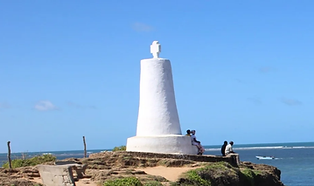
Malindi is one of the earliest Swahili settlements on Kenya's East African coast, dating back to the 13th century. It grew to prominence as a significant commerce port connecting East Africa to Arabia, Persia, and India, exchanging items such as ivory, gold, and textiles. The city received international prominence in 1414 when Chinese explorer Zheng He's fleet visited, and again in 1498 when Portuguese navigator Vasco da Gama arrived and erected a coral pillar, now known as the Vasco da Gama Pillar, as a symbol of alliance. Malindi's architecture shows its diverse cultural legacy, with coral stone buildings and mosques that combine African and Arab influences common to Swahili city-states. Though the city faded in the later Portuguese period as trade routes changed, it was finally refounded in the nineteenth century and now thrives as a popular coastal tourism destination, with historic structures and a marine national park attracting visitors from all over the world.
Malindi
Mombasa
Mombasa is a historic city and Kenya's primary port, located on a coral island in the Indian Ocean and linked to the mainland by a causeway, bridge, and ferry. It was long populated by Bantu-speaking peoples who participated in farming, fishing, and local trading before emerging as a key Swahili city-state in the Indian Ocean trade network. Its strategic coastal location made it a disputed prize for centuries, going through Arab, Persian, Portuguese, and Turkish sovereignty before being taken over by the Sultan of Zanzibar in 1840, followed by British administration in 1895. The city has two ports: the historic Old Port, which is still used by traditional dhows transporting goods from Arabia, the Persian Gulf, and India, and the modern Kilindini Harbor. Mombasa's old city exhibits its rich ethnic heritage with narrow lanes, ornately carved balconies, mosques, and the landmark Fort Jesus, a Portuguese bastion built in 1593-95 and now a museum. Mombasa is now a significant economic city and a renowned tourist destination, molded by centuries of Swahili, Arab, and colonial history.


Mogadishu
Mogadishu's strategic location on the Indian Ocean made it a central hub for maritime trade routes connecting Africa, the Middle East, and Asia, attracting merchants seeking to exchange spices, textiles, and gold. Its accessibility by sea drove significant economic growth and cultural exchange during its medieval peak. The city's role as a major trading center fostered a rich blending of cultures, giving rise to unique artistic styles, architectural achievements, and literary works shaped by Arab, local, and broader Indian Ocean traditions. This cultural integration deeply influenced societal norms and practices across Mogadishu and the surrounding region. As a thriving port city, Mogadishu also played a defining role along the wider Swahili Coast, establishing itself as a key node for commerce between East Africa and the broader world. Its legacy endures through lasting cultural practices, language influences, and trade networks that continued to shape regional development long after its decline as a primary trading hub.Zanzibar

Zanzibar
Zanzibar, an island located twenty-two miles off the coast of East Africa in the Indian Ocean, has been a prosperous commercial center since traders from Arabia, Persia, and India arrived in the first century AD, sailing across the ocean on monsoon winds. Though the islands have little natural resources of their own, Zanzibar's sheltered harbor and strategic location made it a perfect base for exploring the East African coast and a vital stop for merchants going between Africa, the Middle East, and Asia. Persian tradesmen eventually established a permanent presence in Stone Town, leaving an indelible mark on the island's architecture, food, and culture that can still be seen today. Among the many historical remnants left by these early inhabitants is a mosque in the settlement of Kizimkazi, which is thought to have been erected by Yemeni traders in 1107, making it one of the oldest mosques in the southern hemisphere. Zanzibar became the United Republic of Tanzania in 1964, but its rich maritime and cultural legacy remains important to its identity.

Kilwa
Kilwa Kisiwani is a historically significant island off the coast of Tanzania that became one of the most important trade ports along the Swahili Coast in the ninth century. Its strategic location and access to important commodities such as gold, iron, and ivory made it a major economic hub with trading routes extending as far as Asia and the Arabian Peninsula. The Shirazi Dynasty, led by Persian trader Al-Ḥasan, established a thriving Muslim community and vast commercial networks on the island. In the 14th century, Kilwa was admired by Muslim adventurer Ibn Baṭṭūṭah due to its affluence, sophisticated architecture, and cultural richness. However, the city's prosperity began to fade in the late fifteenth century, as altering trade dynamics and the advent of Portuguese explorers, especially Vasco da Gama and Pedro Álvares Cabral, disturbed the Indian Ocean trade lines that Kilwa had long relied on. Today, the island is a significant cultural and historical monument, with the ruins of the Husuni Kubwa palace serving as a reminder of its previous splendor and a tribute to the rich tradition of trade and cultural interchange along the East African coastline.

Mozambique, located along southeastern Africa's coastline, is a land where ancient history and lively culture meet. Long before European contact, the region thrived as an important node in Indian Ocean trade, with ports such as Sofala and Mozambique Island attracting traders from Arabia, India, and Persia who traded gold, ivory, and spices. The Portuguese landed in 1498 and eventually colonized the country for about 500 years, during which time it was subjected to exploitation and the catastrophic slave trade. Independence was declared on June 25, 1975, but a terrible civil war (1977-1992) pushed the nascent nation back significantly. Today, Mozambique is a very resilient country, rebuilding on a foundation of rich cultural heritage, breathtaking beaches, and a history shaped by centuries of exchange, struggle, and transformation.
Mozambique


Mogadishu

Zanzibar


Malindi
Mombasa
Kilwa
Mozambique

