Swahili In St. Louis


Central West End
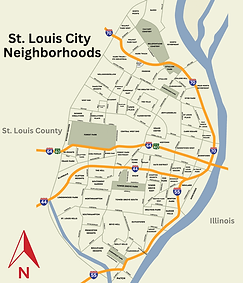
Based on the data provided by Statistical Atlas, the Central West End region had a recorded African population of 140 individuals, with 66 identifying as Nigerian and 74 categorized as "Other Africa."
The category of "Other Africans" is frequently used in census data, presenting a significant challenge in identifying the specific origins of African groups. This generalized classification limits the ability to discern detailed demographic or cultural distinctions within the African population.

Tower Grove
Based on the data for Tower Grove, the total African population is 35, with 13 individuals identifying as Nigerian, 10 as Ghanaian, and 12 categorized as "Other Africa." Below is a bar graph illustrating this distribution.
The distribution of the African population in Tower Grove, is segmented into total Africans, Nigerians, Ghanaians, and individuals categorized as " Other Africans."


The top five neighborhoods perceived to have significant African populations were South City, Olivette, University City, North County, and South Grand. However, these areas were not included in the online data, as they fall outside the boundaries of St. Louis City but are part of St. Louis County. This discrepancy highlights how inter-urban migration patterns of Africans are often better tracked through community perceptions than official census data.

St. Louis African Population Perception
The bar graph highlights the perceived representation of various African nationalities in St. Louis, with Ethiopian, Nigerian, Congolese, Somali, and Kenyan populations being the most frequently reported. Notably, East African countries like Ethiopia, Somalia, Kenya including Dr Congo are more prominently represented in the data. This reflects the significant presence of East African migrants in St. Louis, which may also correlate with the linguistic diversity in the area.
To conclude, we will examine the African population in St. Louis and its rankings from Stacker: Nigeria (2,012), Kenya (1,996), Ethiopia (1,013), South Africa (658), and Liberia (545). The significant presence of Swahili-speaking communities, particularly from Kenya and other East African nations, plays a key role in shaping the cultural and linguistic landscape of the African population in the region. Swahili, being a lingua franca in many African countries, further emphasizes the diverse migration patterns and the role of language in the community's integration and identity in St. Louis.
